冬の日のブーゲンビリア
2025/01/16

概要
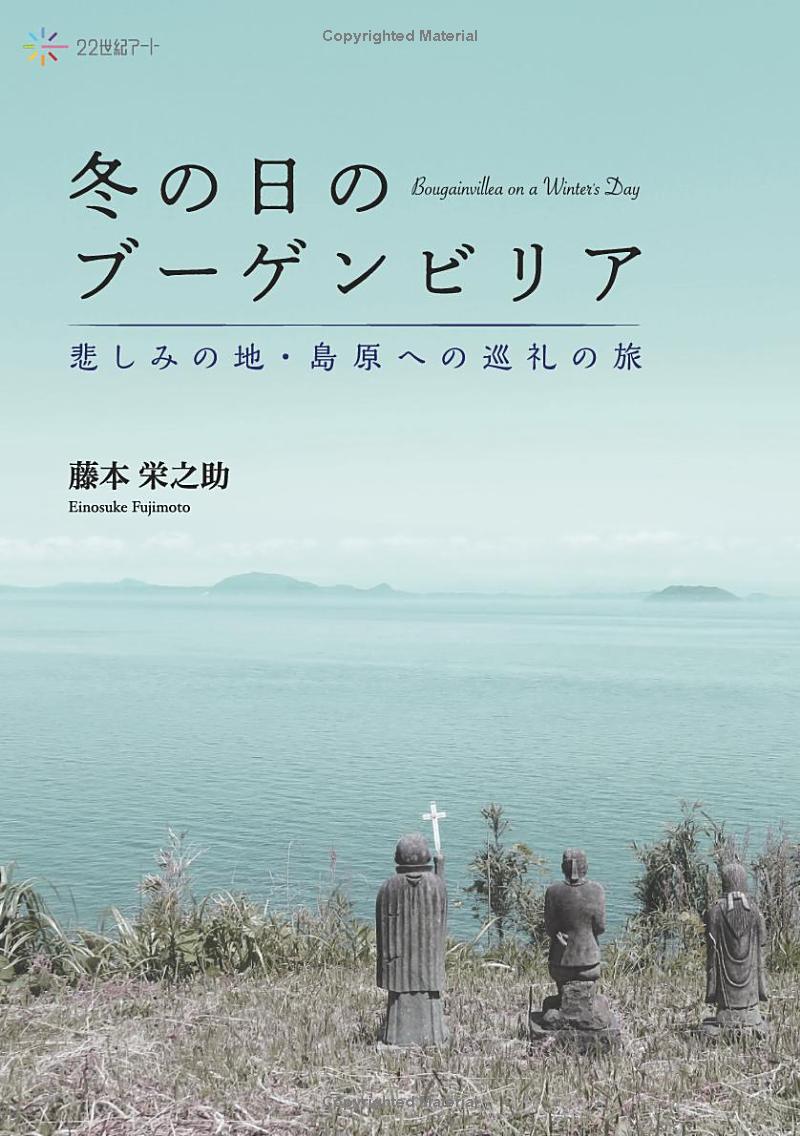
「冬の日のブーゲンビリア」:悲しみの地・島原への巡礼の旅 という本の情報があった。
本の紹介 : アマゾンサイトより
「冬の日のブーゲンビリア」:悲しみの地・島原への巡礼の旅
―今巡礼に旅立つ私も、有馬軍の兵士と全く同じ心境である。―
十七世紀前半、徳川幕府は九州各地の大名に島原反乱軍討伐令を発した。やがて反乱軍が立て籠もる原城には攻囲軍が派遣されたが、その中にはかつてやむを得ずキリスト教を棄て、引き裂かれる思いで島原を去った有馬軍の兵士たちがいた。
故郷である原城を攻めなければならない彼らは、どんな想いで九州山脈を越え、有明海を渡ったのだろうか…。
長年、総合化学メーカーに務めてきた著者は間もなく訪れる定年退職を前に、これからの人生をいかに生きるべきかという答えを探すために、そしてこれまでに自身が犯してきた罪を償う術を探すために巡礼の旅に出る。
亡き母の故郷である島原、そしてかつて有馬軍の兵士たちが悲痛な心情を胸に向かった原城をめざして。
- [目次]
序 章
第1章 延岡城
第2章 高千穂
第3章 草壁社倉 九州山系最奥部
第4章 高森峠から阿蘇南郷谷へ No Return Point
第5章 熊 本
第6章 島 原
第7章 「原 城」
終 章
*付 記
あとがき「暗い森蔭のワルシャワ」
ChatGPTに挿絵のシナリオをプロンプト
(アマゾンサイトの本の紹介から)本の挿絵のシナリオを作成して
この小説「冬の日のブーゲンビリア」を元に、挿絵制作のシナリオを章ごとに以下のように構成してみます。それぞれの章の特徴やテーマに合わせた挿絵のシーン案を提案します。

序章
シナリオ案:
著者が旅立ちの準備をするシーン。静かな冬の朝、コートを羽織り、遠くを見つめる著者の姿が描かれる。ブーゲンビリアの花が雪の中で鮮やかに咲いている様子を背景に加えると、象徴的なイメージになります。

第1章 延岡城
シナリオ案:
延岡城の石垣を眺める著者の背中。城跡に静かにたたずむ風景を描写し、歴史の重みを表現します。冬の冷たい風が木々を揺らしている様子や、曇りがかった空を背景に加えると、旅の始まりの厳粛な雰囲気が伝わります。

第2章 高千穂
シナリオ案:
高千穂峡の渓谷美を描写。著者が断崖絶壁の遊歩道を歩きながら、川面に映る風景を見つめるシーン。冷たく澄んだ水、周囲を覆う木々、そして遠くにかすかに見える鳥居などを配置します。

第3章 草壁社倉 九州山系最奥部
シナリオ案:
著者が深い森の中を歩むシーン。杉の木立が立ち並ぶ道に小さな祠が現れ、そこに手を合わせる姿。霧が立ち込める山間の幻想的な雰囲気を強調します。

第4章 高森峠から阿蘇南郷谷へ (No Return Point)
シナリオ案:
阿蘇山を背景に広がる谷間を描写。道が険しくなる中、著者が歩き続ける姿を描きます。荒涼とした景色の中に雪がうっすら積もる様子を加え、「後戻りできない」という緊張感を出します。

第5章 熊本
シナリオ案:
熊本城の復興工事が進む様子を描く。歴史と再生を象徴する風景として、瓦礫の中に新しい構造が見えるシーン。著者がその光景を見上げている姿を配置。

第6章 島原
シナリオ案:
島原の風景。雪に覆われた街並みや雲仙普賢岳を背景に、著者がブーゲンビリアの花を見つけるシーン。花の鮮やかな色と冬の冷たさの対比を際立たせます。

第7章 「原城」
シナリオ案:
原城跡で祈りを捧げる著者の姿。冬の冷たい風が吹き抜け、枯れ草が揺れる中、城跡に立つ小さな石碑を見つめる姿を描写。遠くに有明海が広がる。

終章
 シナリオ案:
著者が旅を終えた後の姿。故郷の自宅で、窓辺に飾られたブーゲンビリアの鉢植えを見つめるシーン。夕日が差し込む暖かい光と、旅の記憶が重なるような表現。

 挿絵の総括
各章に合わせた挿絵のスタイルを統一しつつ、特定の色(例: 冬の冷たい青、ブーゲンビリアの鮮やかな赤)を象徴的に使用すると物語全体の雰囲気が統一されます。
ImageFxによる画像生成とプロンプト
ImageFxは英語のプロンプトの方が正確
序章 旅立ち
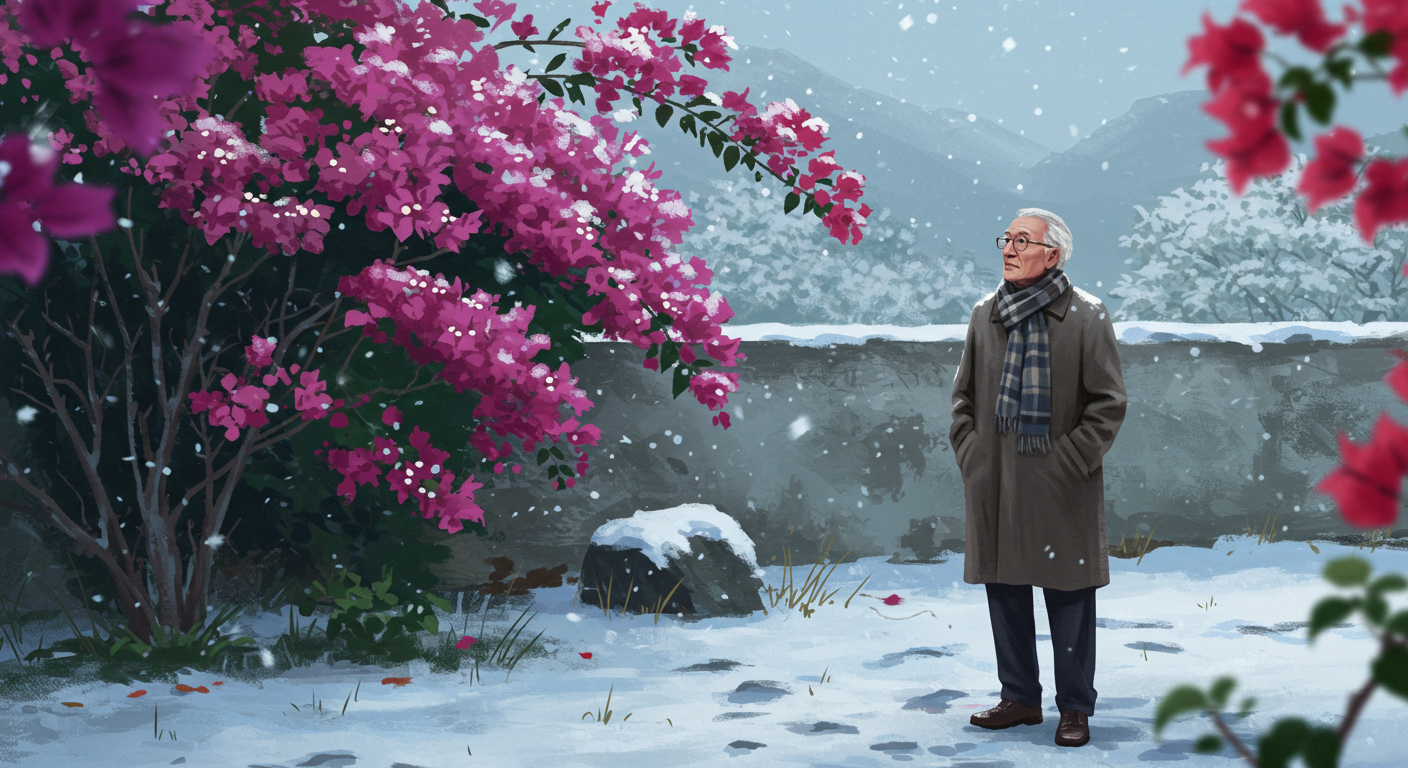
A gentle winter morning landscape in the prologue depicting the author preparing for a journey. The figure, a man in his 70s, stands outside wearing a long coat and scarf, gazing thoughtfully into the distance. Despite the surrounding snow-covered landscape, vibrant bougainvillea flowers bloom brightly in the background. The soft morning light illuminates the scene, creating a striking contrast between the bright flowers and the muted winter colors. The atmosphere is calm and contemplative, symbolizing the beginning of a meaningful journey.
第1章 延岡城
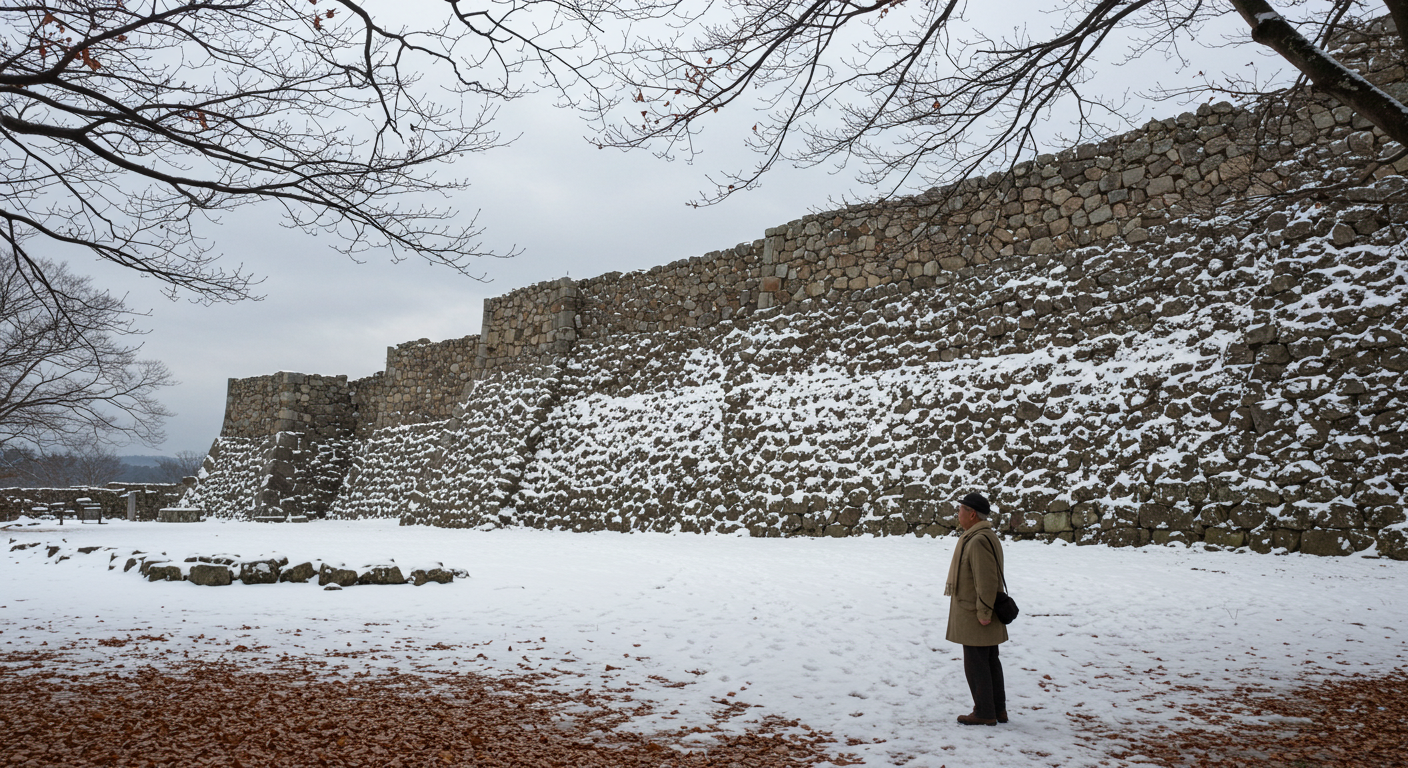
A quiet winter morning at the ruins of Nobeoka Castle in Japan. This scene depicts the remains of an ancient stone wall covered with light snow. A lone figure, a man in his 70s wearing a long coat and scarf, stands in the foreground, gazing meditatively at the ruins of the castle. The sky is cloudy and the soft, diffused light creates a peaceful atmosphere. Bare trees with intricate branches frame the landscape, and scattered fallen leaves add texture to the snowy ground. The atmosphere is introspective and solemn, evoking a sense of history and quiet beauty.
第2章 高千穂
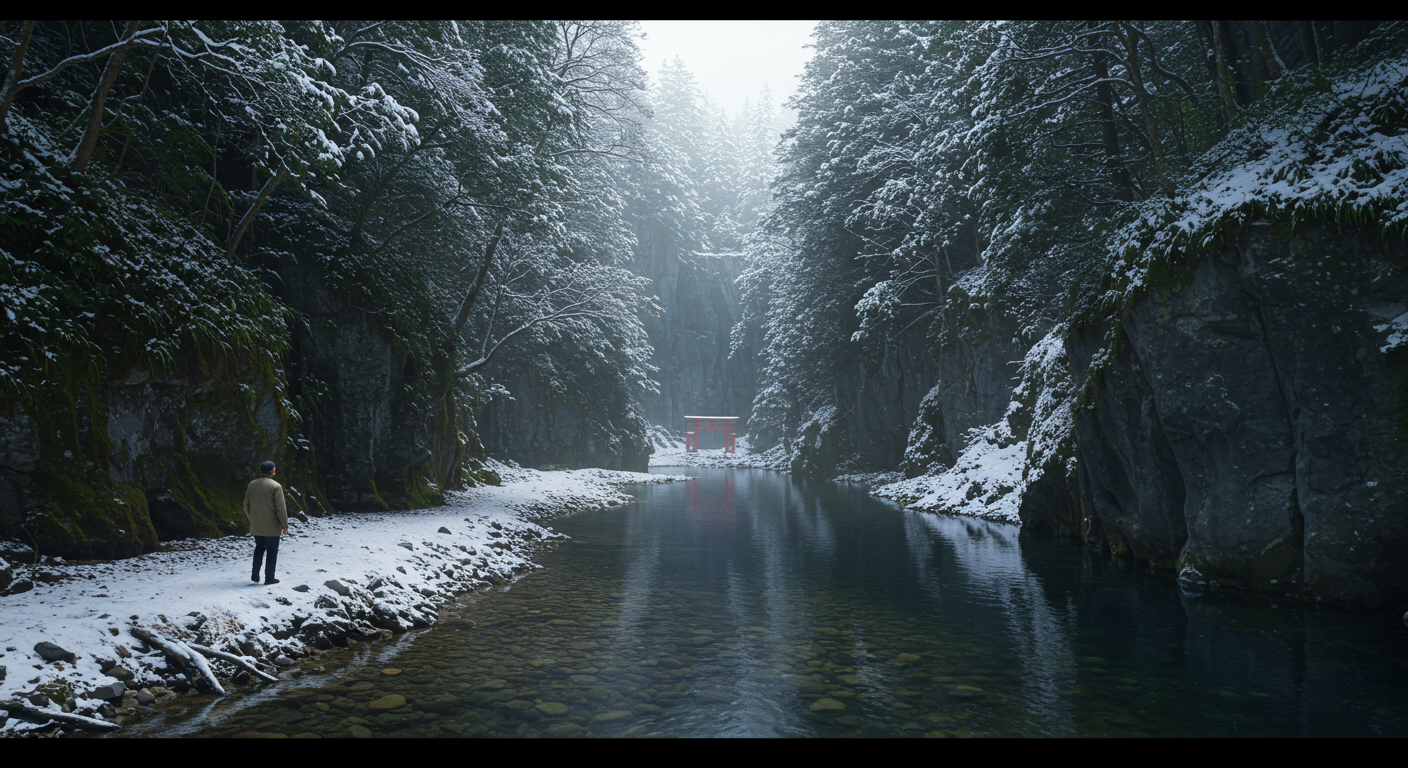
Chapter 2 provides a serene depiction of Japan's Takachiho Gorge in winter. The scene shows a deep, narrow canyon covered in snow-capped trees and with sheer cliffs on either side. The river water below is clear and calm, reflecting the surrounding cliffs and winter sky. A lone male traveler in his 70s wearing a heavy coat walks meditatively along a narrow path at the edge of a valley, admiring the scenery. In the distance, a small red torii gate can be seen faintly among the trees, adding a spiritual and tranquil atmosphere to the scene. The atmosphere is calm and reflective, highlighting the natural beauty of the valley.
第3章 草壁社倉 九州山系最奥部
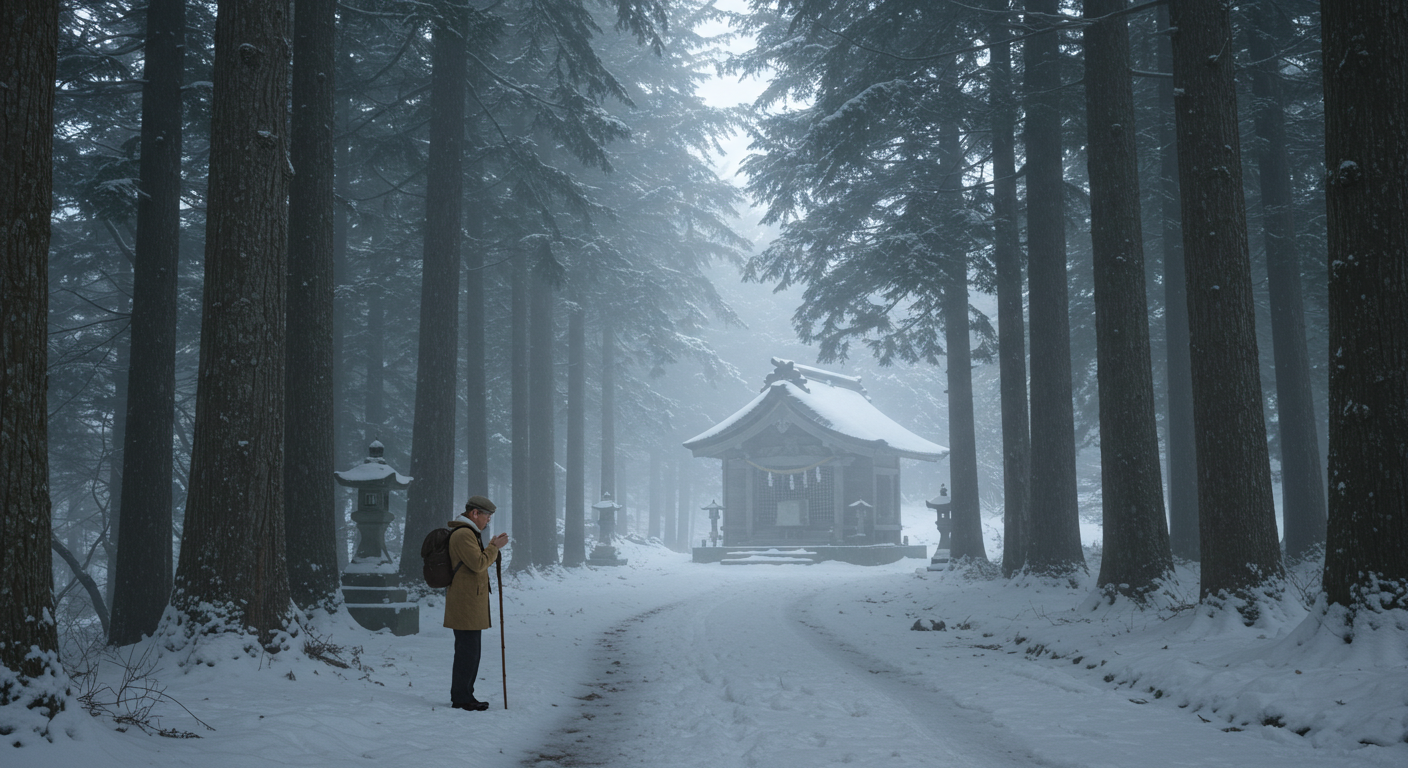
Chapter 3 depicts a quiet and mysterious winter forest deep in the mountains of Kyushu, Japan. The scene includes tall cedar trees with snow-capped branches, and a narrow, winding road covered in fresh snow leading to a small shrine hidden among the trees. A lone traveler, a man in his 70s, wearing a thick coat and scarf, stands in front of a shrine, hands clasped together in prayer. Soft light passes through the fog, creating a magical glow. The atmosphere is calm and reflective, evoking the quiet beauty and spirituality of its surroundings.
第4章 高森峠から阿蘇南郷谷へ (No Return Point)
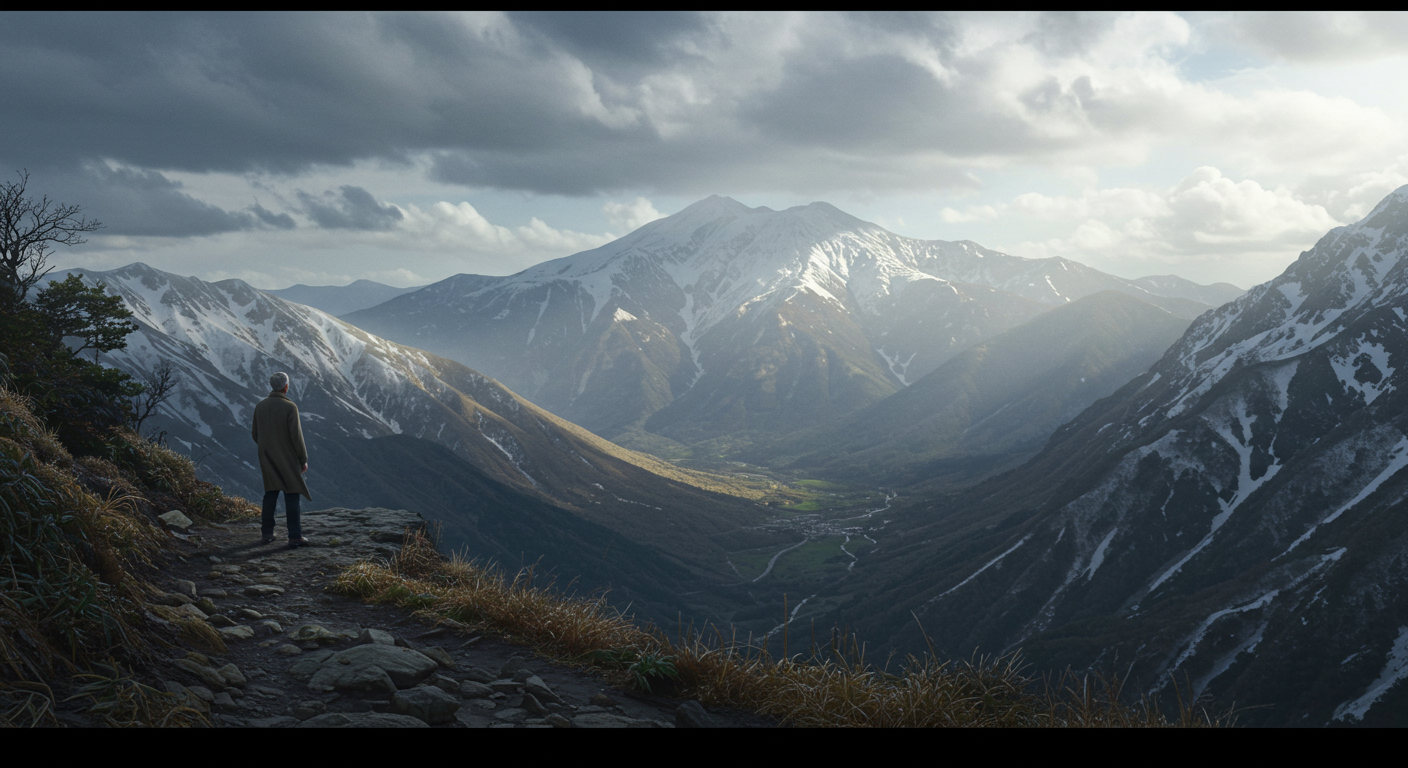
Chapter 4 - Breathtaking scenery from Kyushu's Takamori Pass to Aso Nango Valley in winter. The scene depicts a rugged mountain path leading into a vast valley surrounded by snow-capped mountains. A man in his 70s wearing a long coat stands on the edge of a mountain pass, looking out at the vast landscape with determination. The sky is overcast, with streaks of light peeking through the clouds and illuminating patches of the valley below. The solemn and solemn atmosphere emphasizes the turning point of the journey.
第5章 熊本
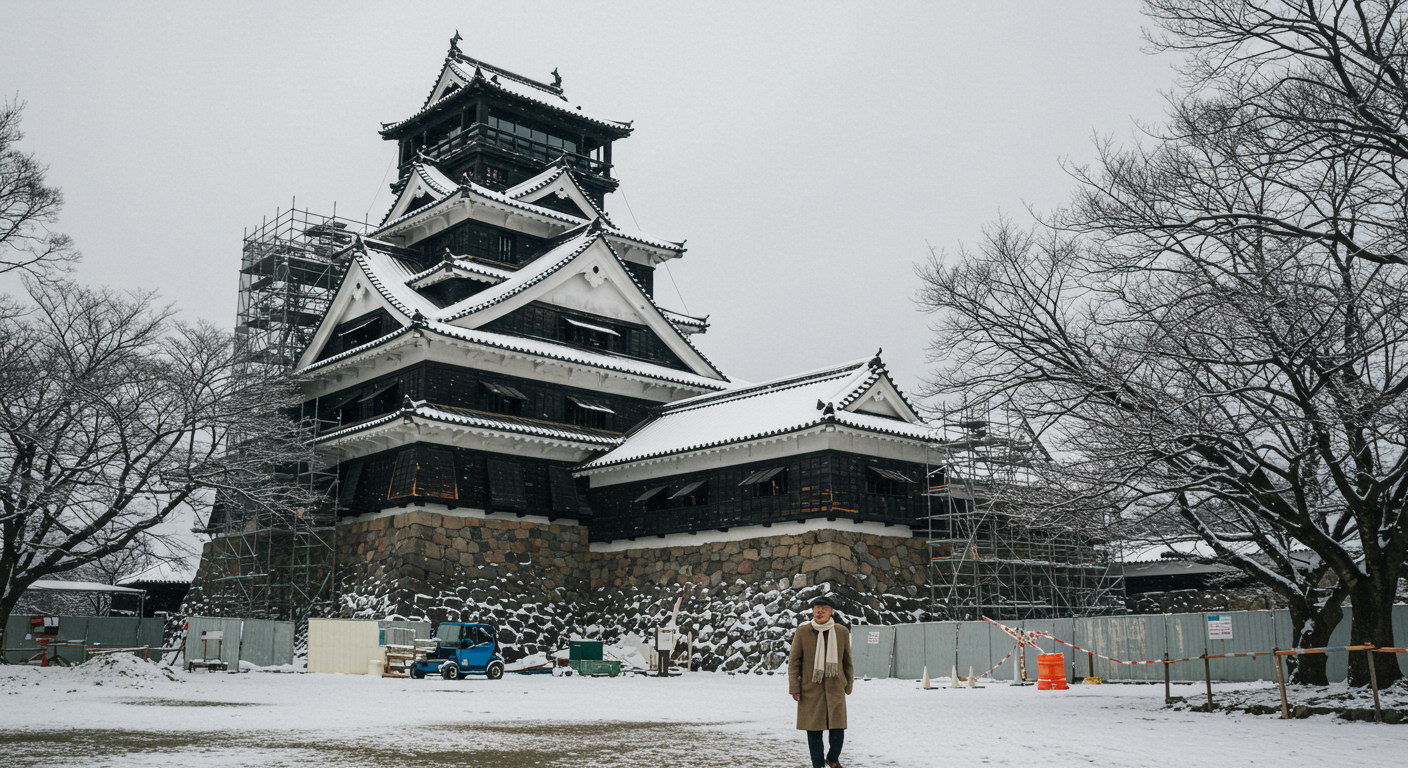
Chapter 5: Winter scenery of Kumamoto Castle in Japan. The castle stands tall, its black and white structure contrasting with the light dusting of snow on its roofs. Scaffolding and construction equipment can be seen in the foreground, symbolizing the restoration work. A male traveler in his 70s wearing a long coat and scarf walks toward the castle, looking up in awe. The bare trees and cloudy skies surrounding the castle create a calm yet resolute atmosphere, reflecting themes of resilience and regeneration.
第6章 島原
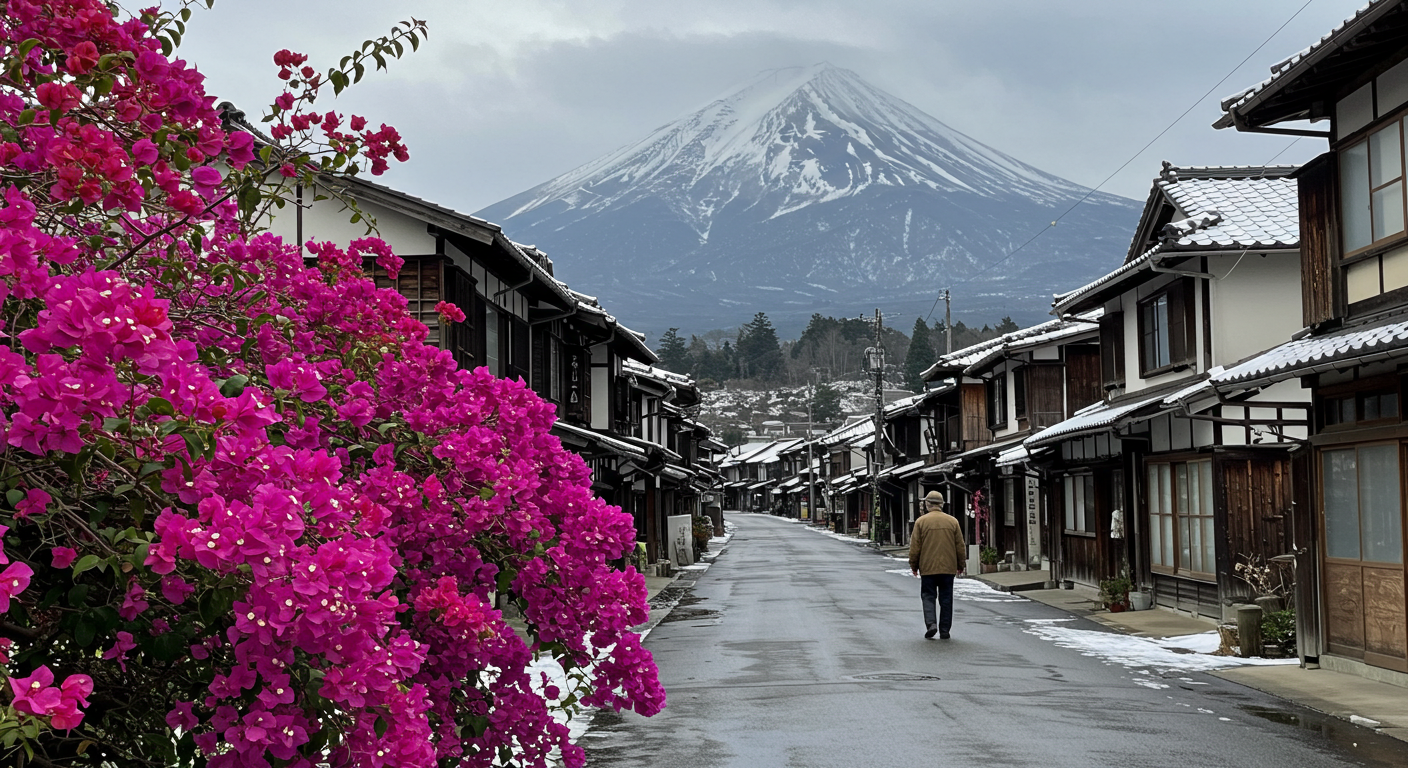
A serene winter scene in Shimabara, Japan. The view features a quiet town street with traditional Japanese architecture dusted with snow. In the foreground, a vibrant bougainvillea flower blooms vividly despite the winter cold, standing out against the muted background. A lone traveler in a long coat walks along the street, pausing to admire the flower. In the distance, Mount Unzen looms under a cloudy sky, its peak capped with snow. The atmosphere is peaceful yet reflective, capturing the blend of natural beauty and historical depth.
第7章 「原城」
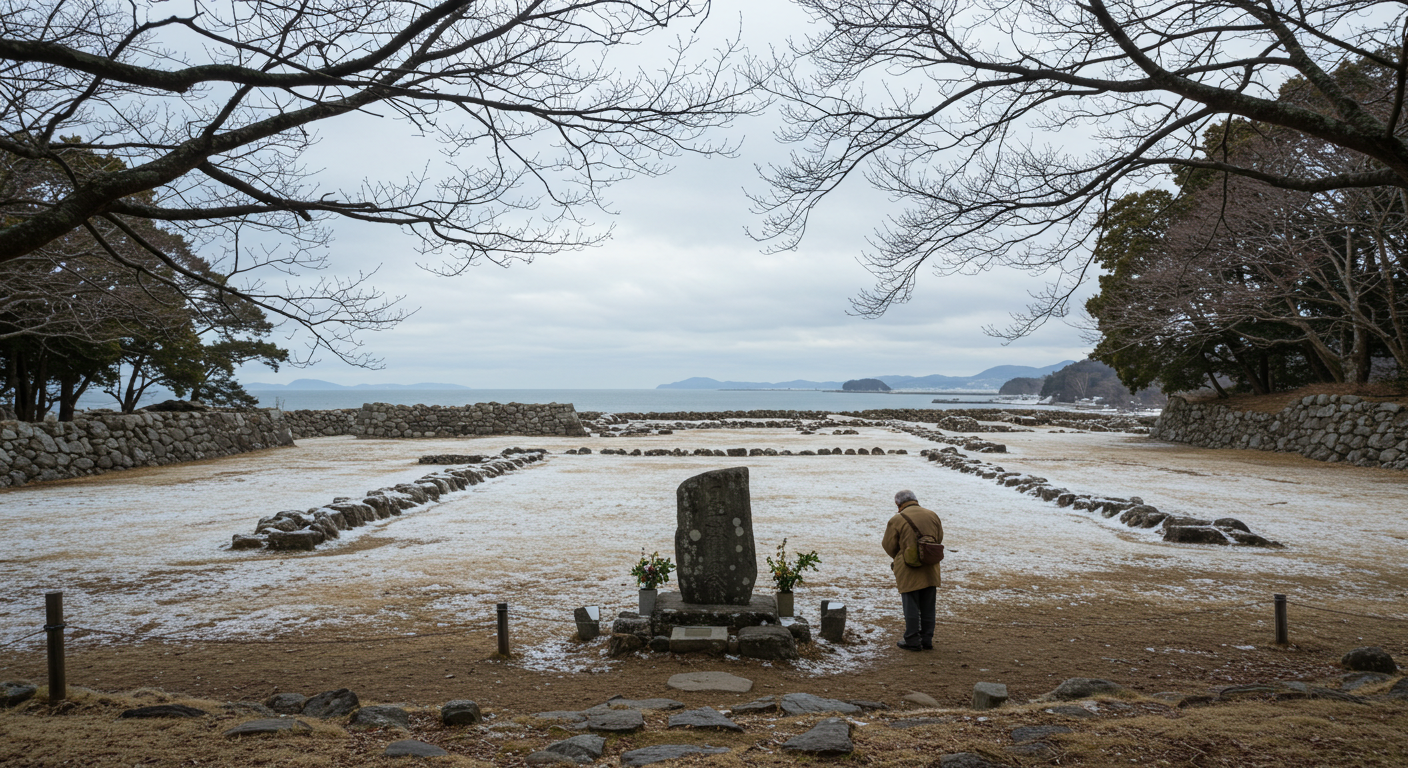
A serene winter scene in Shimabara, Japan. The view features a quiet town street with traditional Japanese architecture dusted with snow. In the foreground, a vibrant bougainvillea flower blooms vividly despite the winter cold, standing out against the muted background. A lone traveler in a long coat walks along the street, pausing to admire the flower. In the distance, Mount Unzen looms under a cloudy sky, its peak capped with snow. The atmosphere is peaceful yet reflective, capturing the blend of natural beauty and historical depth.
終章
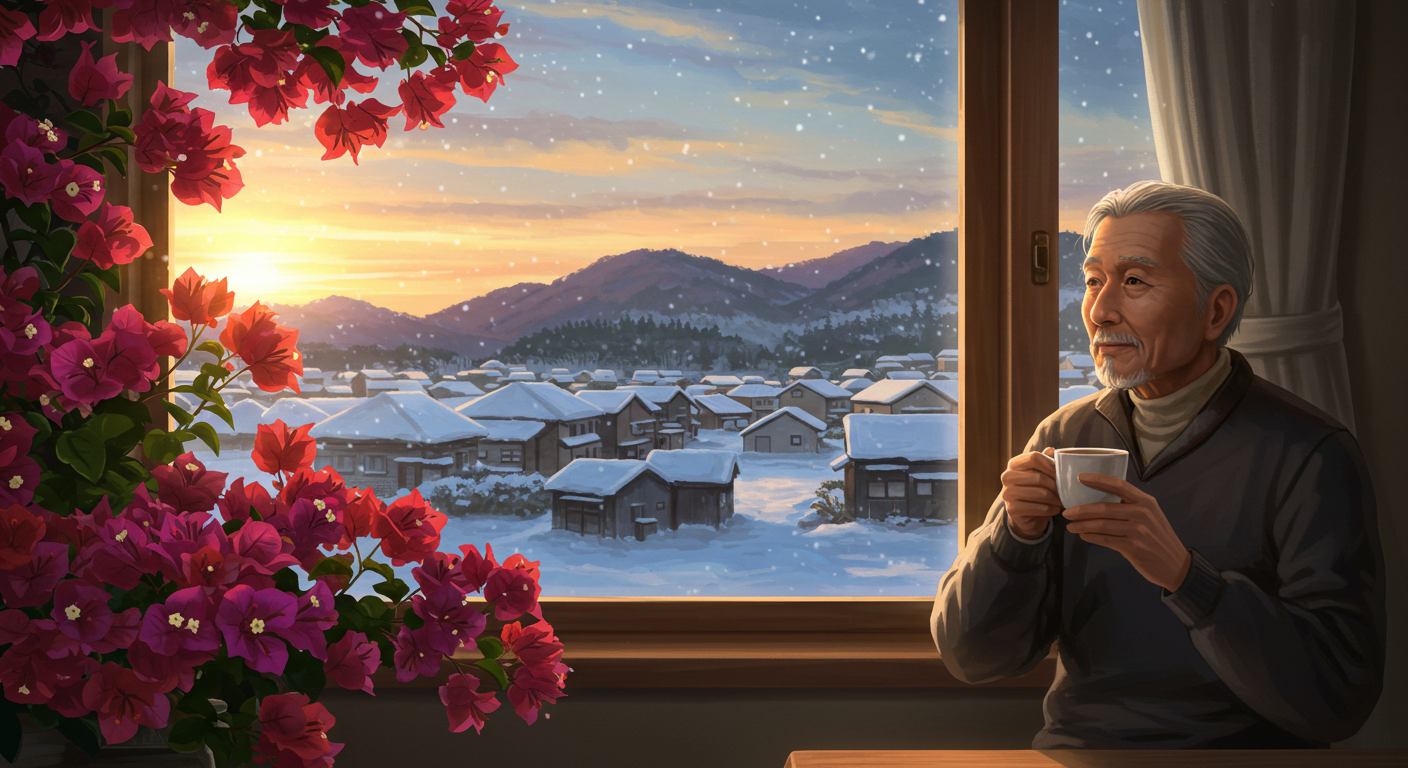
A warm and reflective interior winter scene in the final chapter. It is a cozy room where you can see the snowy scenery outside from the window and see the small town under the soft dusk. Bougainvillea blooms brightly on the windowsill in the foreground, illuminated by the warm light of the setting sun. An elderly Japanese tourist sits nearby, cup of tea in hand, looking out the window with a calm and thoughtful expression on his face. The calm and nostalgic atmosphere symbolizes the end of a meaningful journey.
ImageFxによる画像生成「島原の乱」
島原の乱
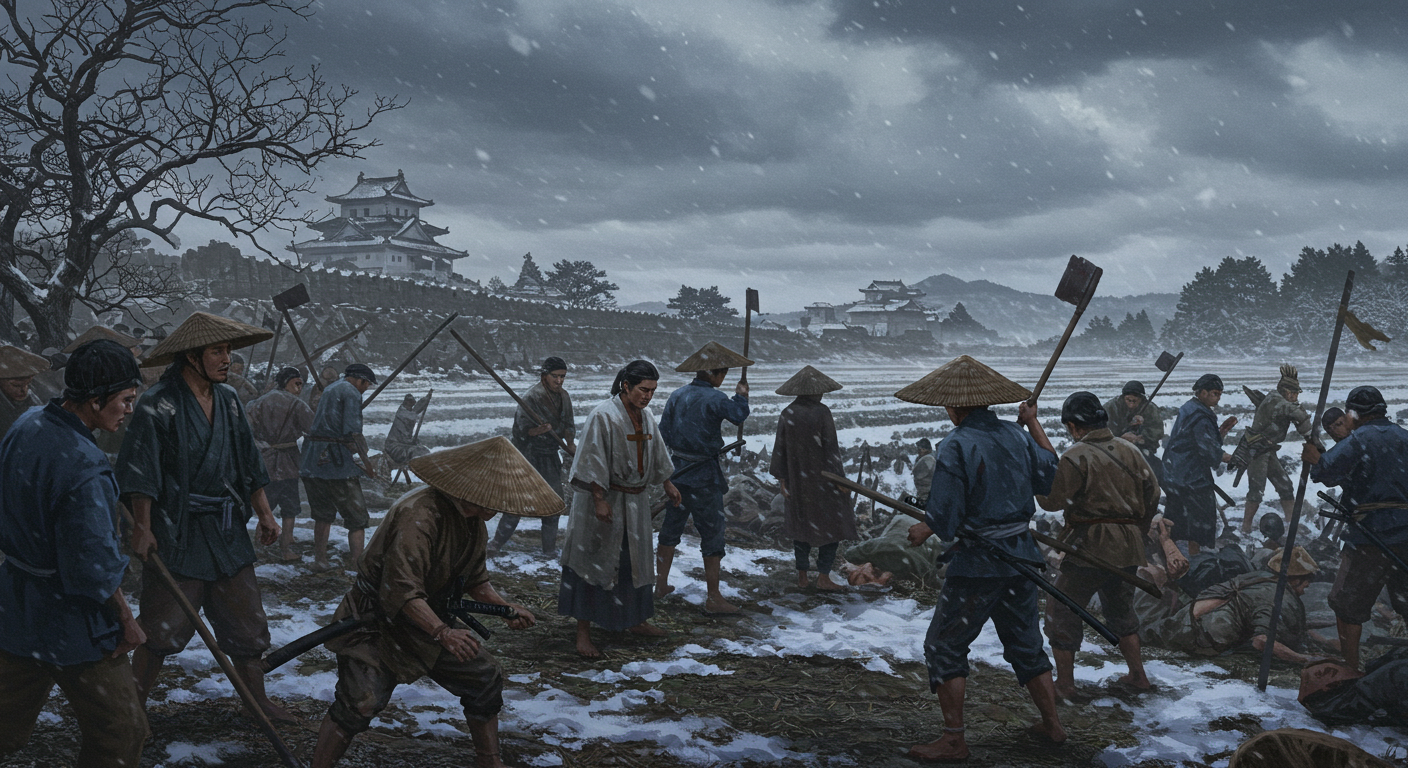
A dramatic depiction of the Shimabara Rebellion in 17th century Japan. The scene shows impoverished farmers and Christian rebels, armed with farming tools and swords, rising against oppressive samurai forces. They are gathered in a rural setting with a fortified position in the distance, such as the ruins of Hara Castle. Some wear tattered clothes, while others carry Christian symbols like crosses. The background features a cloudy winter sky, barren trees, and snow-dusted fields, creating a somber and intense atmosphere. The image captures the desperation and determination of the rebels.
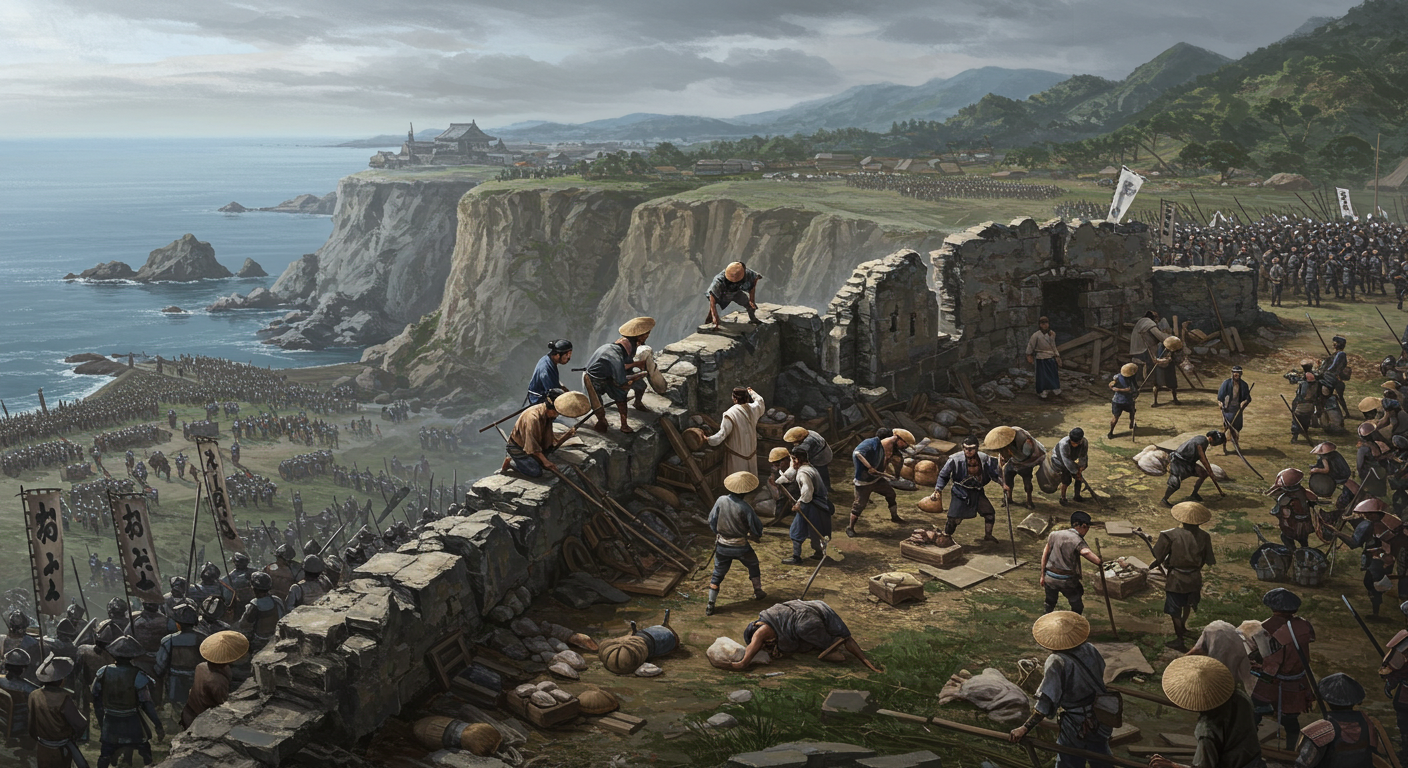
A dramatic historical depiction of the Shimabara Rebellion at Hara Castle in 17th century Japan. The scene shows the rebel forces, including farmers and Christian samurai, taking a defensive stance within the ruins of Hara Castle, located on a natural fortress overlooking the sea. The rebels, wearing tattered clothing and carrying makeshift weapons, appear determined despite signs of hunger and exhaustion. Surrounding the castle are the overwhelming forces of the shogunate's army, with banners and encampments visible in the distance. The sky is overcast, adding a somber tone, and the landscape includes steep cliffs and the sea in the background. The atmosphere is tense and evocative, reflecting the rebels' desperate stand against overwhelming odds.
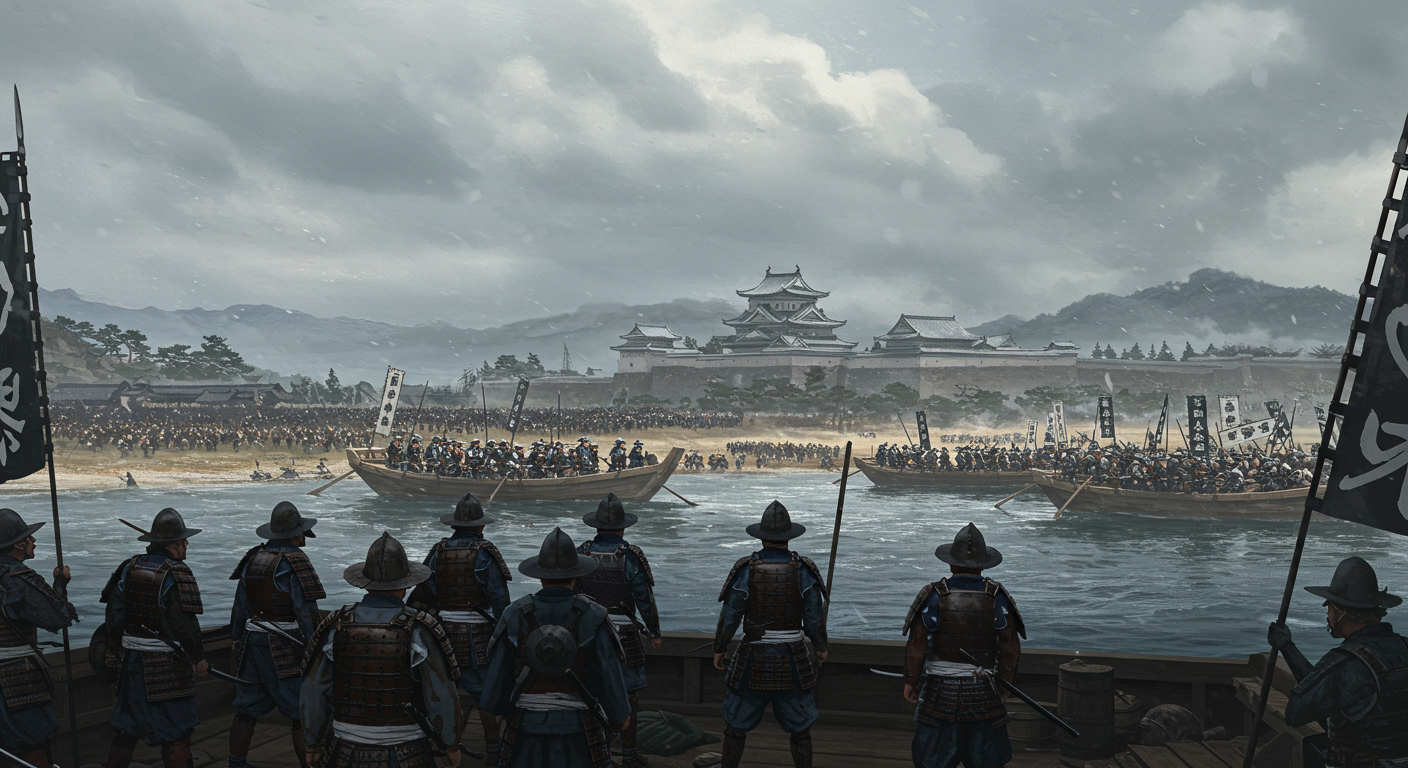
A dramatic historical depiction of the Shimabara Rebellion, which occurred at Hara Castle in Japan in the 17th century, from the perspective of the advancing Shogunate army. In this scene, a large army crosses the Ariake Sea by boat, their flags waving in the cold wind. Hara Castle can be seen in front. Soldiers in traditional samurai armor advance in disciplined formations, carrying spears and swords. In the distance you can see rebels preparing to defend themselves on the city walls. The sky is overcast, and the faint rays of sunlight shining through the gaps in the clouds heighten the tension and eerie atmosphere. Scene seen from soldiers on board
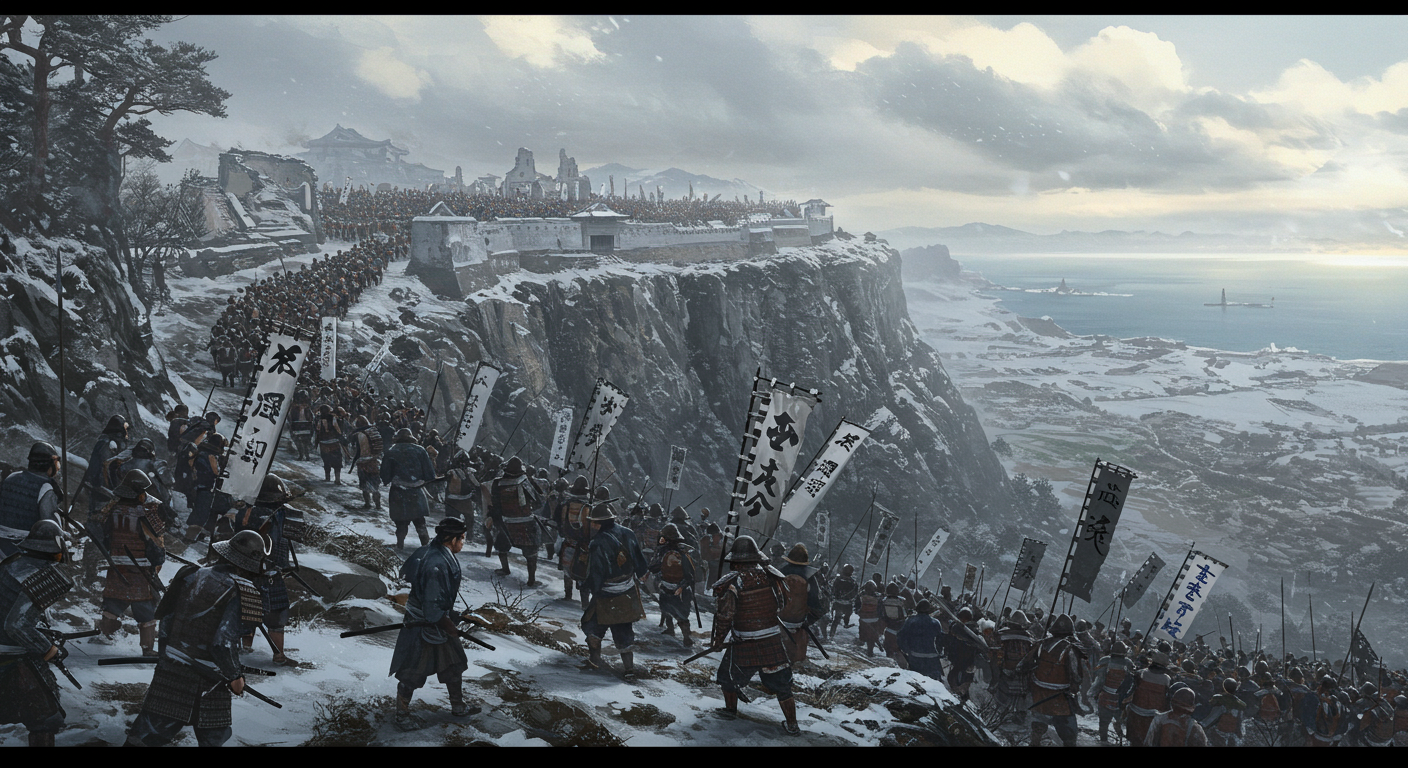
A dramatic historical depiction of the Shimabara Rebellion at Hara Castle in 17th century Japan, from the perspective of the advancing shogunate forces. The scene shows a large army moving up steep terrain toward the castle ruins, their banners waving in the cold wind. Soldiers in traditional samurai armor carry spears and swords, advancing in disciplined formations. In the distance, the rebel forces can be seen on the castle walls, preparing their defenses. The sky is overcast, with a faint hint of sunlight breaking through the clouds, adding to the tense and foreboding atmosphere. The landscape features rugged cliffs, the sea visible in the far background, and traces of snow covering the ground.
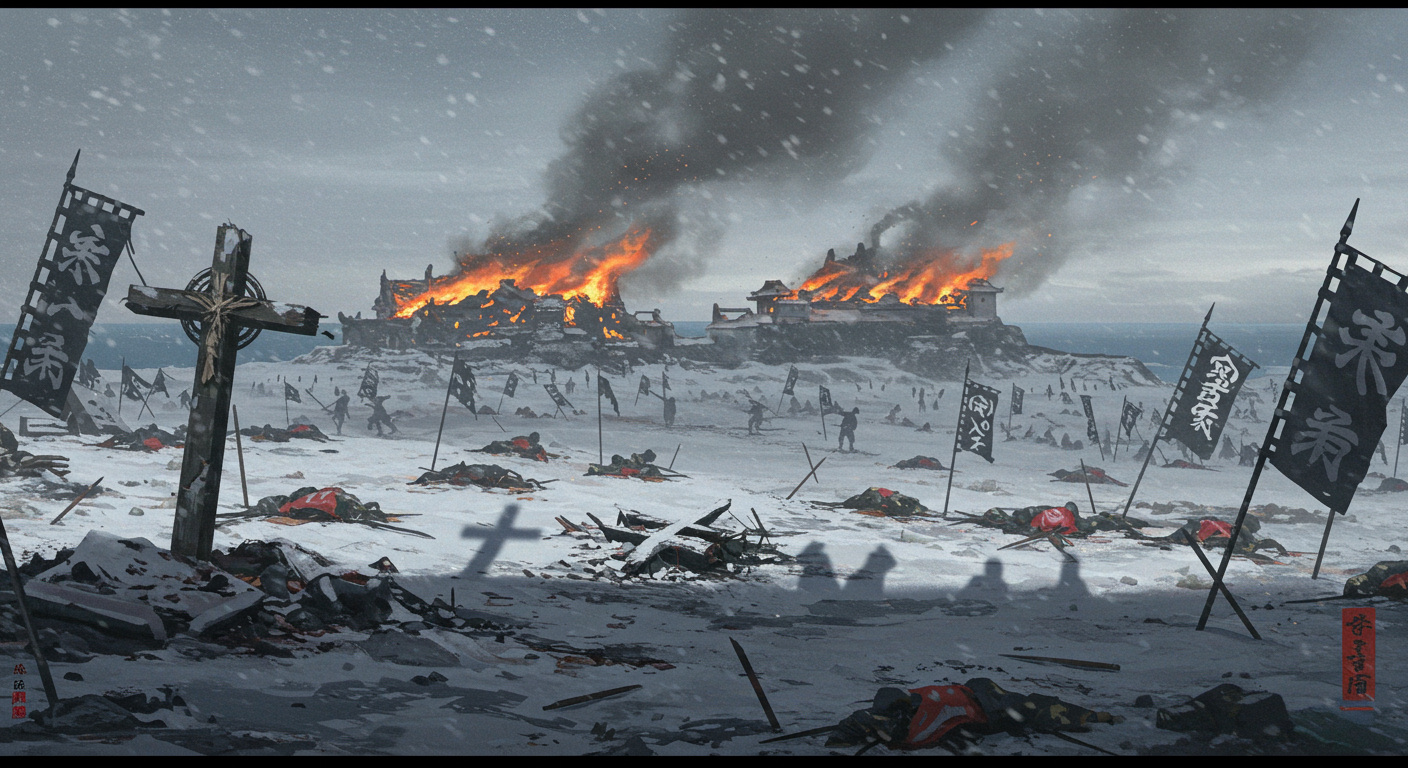
Japan's Edo period. A scene overlooking the Ariake Sea in Kyushu depicts the aftermath of the final battle, depicting the ruins of a castle smoldering under a gray winter sky. Fallen flags and weapons are scattered on the snowy ground, and the shadows of soldiers float over the desolate battlefield. In the foreground, a broken Christian cross, symbolizing the fall of the rebels, lies in ruins. The atmosphere is heavy and sad, with a sense of tragedy and loss permeating the scene.
感想
実際に島原を訪れたことは無いが、イメージを膨らませて本の作者の気持ちになってみた。